How Do You Prevent Frozen Pipes in New Mexico and What Do You Do When They Freeze?
If you turn on a faucet and only a trickle comes out, suspect a frozen pipe. Keep that faucet open and find the frozen section. Warm it with gentle heat, like a hair dryer or a heating pad, and never with an open flame. If the pipe has split, shut off the main water valve first, then call a plumber.
The short answer on how to prevent frozen pipes is warm air and moving water. Drip the faucets on exposed pipes, open the cabinet doors and hold the heat steady. If a pipe splits anyway, our frozen and burst pipe repair page shows how we fix it.
Where do pipes freeze in New Mexico homes?
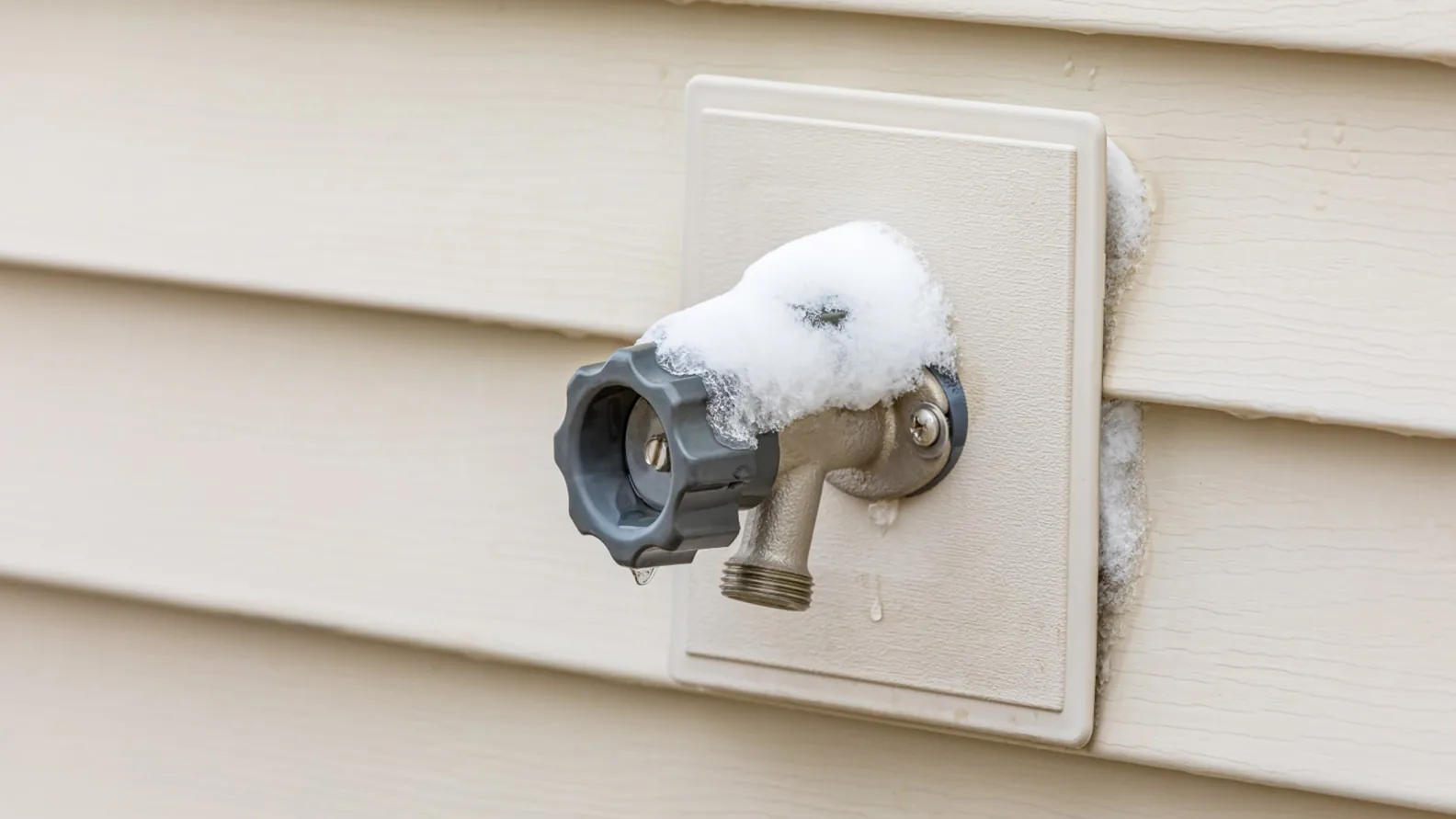
The pipes that freeze most are the ones exposed to severe cold, the Red Cross says. That means outdoor hose bibs, sprinkler lines and supply pipes in unheated crawl spaces, attics and garages. Pipes in kitchen cabinets and along exterior walls with little or no insulation freeze too.
The spot where the water line comes in through the foundation is another likely place, per the Red Cross. In New Mexico, add casitas, detached garages and well houses that have water lines but little heat. The underground yard line from the meter or the well can freeze too, and the fix is water line repair.
Homes in the mountains freeze harder than homes down in the valley. Edgewood, where we are based, sits near 6,700 feet in the East Mountains. Up here, we usually see a cold snap that drops to minus 20 degrees.
How do you prevent frozen pipes?
Do these when a hard freeze is in the forecast. Each one comes from the Red Cross.
- Let faucets drip. When it is very cold, let cold water drip from faucets served by exposed pipes. Even a trickle helps.
- Open cabinet doors. Open kitchen and bathroom cabinet doors so warm air reaches the pipes. Move cleaners and chemicals out of reach of children.
- Close the garage. Keep the garage door closed if water lines run through it.
- Hold the thermostat steady. Keep it at the same temperature day and night.
- Leave the heat on when you travel. Set it no lower than 55 degrees.
Before the first freeze, remove, drain and store your hoses. Close the inside valve that feeds each outdoor hose bib, then open the bib outside. Leave it open so any water left in the pipe can expand without breaking it.
Insulate water lines that run through unheated areas, and seal cracks near them with caulk, the National Weather Service says. Find your main water shut-off now and learn how to close it before a pipe ruptures.
How do you thaw frozen pipes safely?
Keep the faucet open while you work. As the ice melts, running water helps melt the rest. Then warm the frozen section with one of these options from the Red Cross:
- An electric heating pad wrapped around the pipe
- An electric hair dryer
- A portable space heater, kept away from anything that can burn
- Towels soaked in hot water, wrapped around the pipe
Never use a blowtorch, a kerosene or propane heater, a charcoal stove or any other open flame. Keep the heat on until full water pressure comes back. Then check every other faucet in the house. If one pipe freezes, others may freeze too.
If you can see a split or a bulge, shut off the main before you thaw that section. Once the ice melts, water can run out of the split. If you cannot find, reach or thaw the frozen spot, the Red Cross says to call a plumber.
What happens when a frozen pipe bursts?
Water expands as it freezes, and the Red Cross warns that expanding water can break metal or plastic pipes. Pressure also builds between the ice and a closed faucet, says the National Weather Service. A dripping faucet relieves it.
Many splits stay quiet until the ice melts and water moves again. A split in an exterior wall can soak the drywall, and a line above a ceiling can leak through it.
If you think water got into a wall or ceiling, water leak detection tracks down where it is coming from. A split line under a slab floor is slab leak repair work.
In a storm, the calls we typically get are frozen pipes, leaks in the wall, yard lines and slab leaks. Boilers, heaters and mini splits act up in the same cold snaps. If water damaged the house, call your insurer.
What happened in the February 2011 freeze?
In early February 2011, an arctic outbreak hit northern and central New Mexico. The National Weather Service says burst pipes caused millions of dollars in damage to homes, businesses and city buildings. The Albuquerque Sunport went 88 hours in a row below freezing.
It was the coldest air most New Mexicans had seen since 1971, the Weather Service says. A federal report on the event puts Albuquerque’s lows between 7 degrees and minus 7 degrees. That compares with an average low of 26.
Gas utilities cut service to more than 30,000 New Mexico customers, in areas that included Bernalillo and Placitas. Relighting had to be done by hand at each customer. The Weather Service says several rural communities in northern New Mexico went without heat for days.
When the heat goes out in a cold snap, the pipes are next. If you smell gas, leave the building and call the gas utility first.
What should you check before, during and after a freeze?
Use this checklist when a hard freeze is in the forecast.
| When | Check |
|---|---|
| Before | Hoses off, drained and stored |
| Before | Hose bib valves closed inside, bibs open outside |
| Before | Pipes in unheated spaces insulated, main shut-off found |
| During | Faucets on exposed pipes dripping |
| During | Cabinet doors open, garage door closed |
| During | Thermostat steady, never below 55 degrees if you leave |
| After | Full pressure at every faucet, no wet drywall or soggy ground over the yard line |
When should you call a plumber and when can you wait?
You can usually handle one frozen faucet you can reach, if gentle heat brings back full pressure and nothing leaks. Watch that pipe on the next cold night.
Call a plumber when:
- You cannot find, reach or thaw the frozen section.
- A pipe split, or water is showing up where it should not be.
- The frozen line is inside a wall, under a slab or underground.
- No water reaches the house at all.
- Your boiler or heater quit in the same cold snap.
If water is running into the house, shut off the main first. Then call our 24-hour emergency plumbing line at (505) 306-8285.
Who fixes frozen and burst pipes around Albuquerque and the East Mountains?
Wright Flow Plumbing and Heating is based in Edgewood, in the East Mountains east of Albuquerque. We work Albuquerque, Rio Rancho, Corrales, the East Mountains and about 70 miles around. Call any hour, day or night, and we will get you scheduled as fast as we can.
Our frozen pipe repair page covers how we find the frozen section, thaw it and cut out the split. We repair copper, PEX and galvanized pipe, and we replace hose bibs that froze. Call (505) 306-8285 for a free estimate.