How Much Does Water Heater Replacement Cost in New Mexico?
Most New Mexico homeowners replacing a tank water heater should plan on roughly $900 to $2,500 for the finished job. National cost guides put a full tank replacement anywhere from about $600 to $2,500 installed. The common averages land between about $1,300 and $1,900. A plain swap of a 40 gallon gas unit in the same spot sits at the low end.
Those are market numbers, not our price list. The only number that matters for your house comes from looking at the heater itself. We check the space around it and the gas or electric hookup. Wright Flow Plumbing and Heating gives a free estimate in writing before the work starts. Call (505) 306-8285.
What Goes Into the Price of a New Water Heater?
The bill is the unit plus the labor plus whatever parts the code requires. National cost guides report these ranges.
| Line item | Range from national cost guides |
|---|---|
| 40 gallon tank, unit only | $440 to $2,300 |
| 50 gallon tank, unit only | $530 to $2,900 |
| Electric tank, installed | $900 to $2,000 |
| 40 gallon gas tank, straight swap installed | $900 to $1,500 |
| Labor, same size unit in the same spot | $150 to $450 |
| Labor, harder installs | up to about $1,000 |
| Expansion tank, installed | $150 to $450 |
| Haul away of the old unit | $50 to $150 |
| Replacing an existing vent | $100 to $600 |
| Running a vent where there was none | $500 to $1,500 |
| Permit | $25 to $300 |
A basic 40 gallon tank sits near the bottom. High output and high efficiency models sit near the top. Our water heater installation page walks through what a code compliant install includes.
Why Do Plumbers Charge So Much to Replace a Water Heater?
Cost guides put labor at 30 to 50 percent of a typical water heater bill. The old tank gets drained, disconnected and carried out. Then comes the new unit, the water connections, and a gas connector or electric whip. A vent, a relief valve discharge and an expansion tank follow as the house needs them.
New Mexico’s mechanical and plumbing permit fee schedule is 14.5.5.13 NMAC. It lists $37.50 as the administrative fee for any inspection, plus $4.00 for each water heater. Gas work adds $6.00 for each gas piping system and $4.00 for each gas pipe outlet. A second inspection is another $37.50. The jurisdiction that issues your permit sets what it adds. We pull the permit and meet the inspector.
Do You Need a High Altitude Water Heater in New Mexico?
Elevation changes how a gas burner runs. Thinner air carries less oxygen, so manufacturers set an altitude ceiling for every model. That ceiling is in the installation manual, and it varies by unit.
One residential gas water heater installation manual requires a new burner orifice above 7,700 feet. That comes from the National Fuel Gas Code (ANSI Z223.1 / NFPA 54). The same manual warns that a wrong orifice can produce carbon monoxide above safe limits. Other models set a lower ceiling and call for a derate kit.
Albuquerque sits near 5,300 feet in the valley. Edgewood is closer to 6,700 feet, and the East Mountains run higher still. The metro sits below the 7,700 foot line in that manual. Higher up, the model sheet is worth reading before a unit is bought.
What Else Has to Be Brought Up to Code?
New Mexico adopts the 2021 Uniform Plumbing Code under 14.8.2.8 NMAC. Pulling out a heater installed years ago often uncovers work the new one needs.
Expansion tank. A pressure reducing valve, a check valve or a backflow preventer makes your house a closed system. A manufacturer’s manual states that a properly sized and charged thermal expansion tank must be installed on all closed systems. Heated water expands, and in a closed system it has nowhere to go. That shows up as a relief valve that drips and, later, a tank that fails early. Manuals note that kind of failure is not covered by the limited warranty.
Relief valve discharge. The temperature and pressure valve needs a discharge pipe. It ends within 6 inches above a drain, or outside the building. Nothing goes between that valve and the tank.
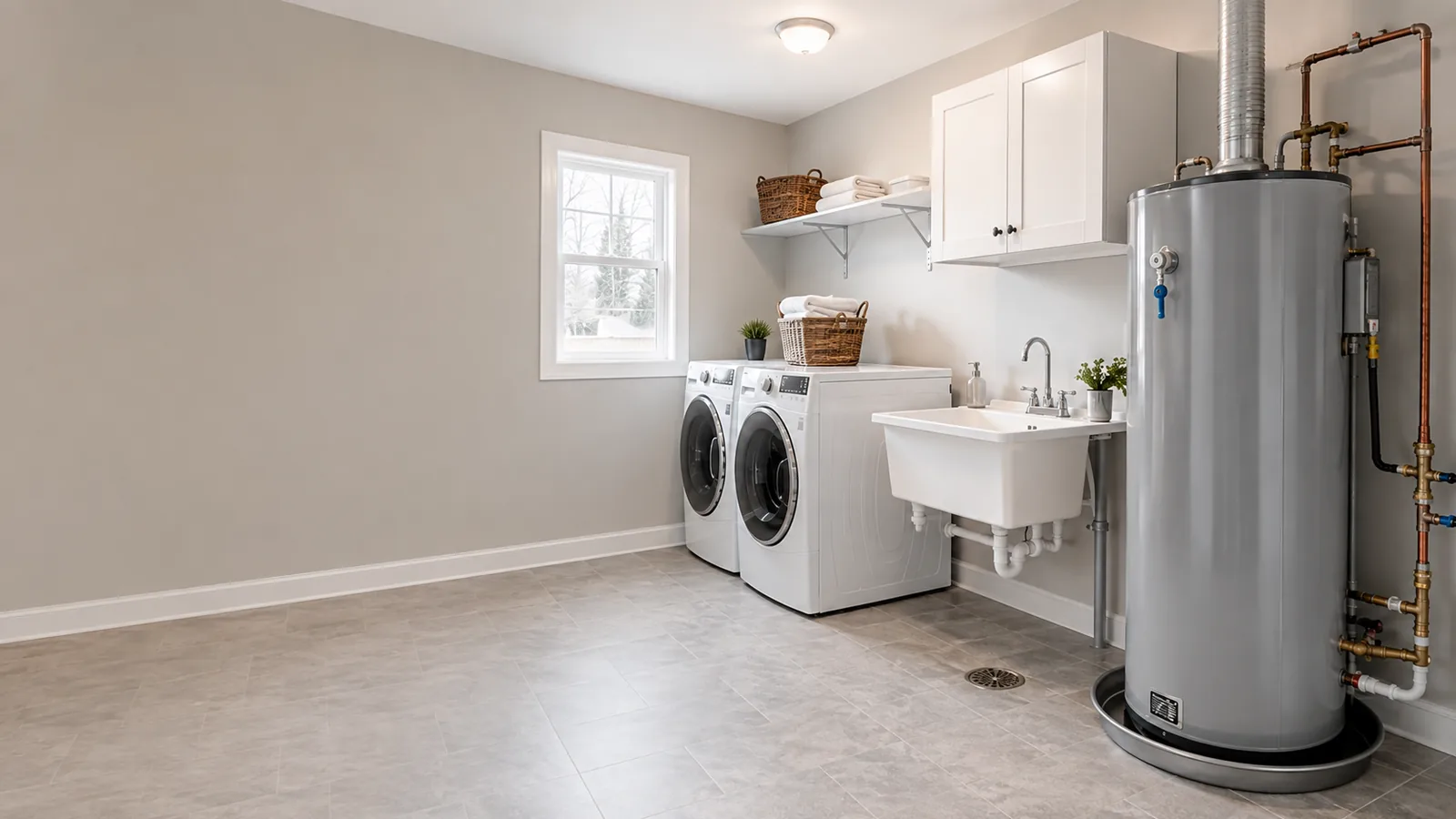
Drain pan. Where a leak would damage the house, a metal pan piped to a drain goes under the heater. Manuals call for a pan at least 1 inch wider than the tank jacket.
Venting and gas. A gas heater needs a vent sized for it and a sediment trap near the gas inlet. An old vent, a wrong connector or a shared flue often has to be redone. That is where a simple swap turns into a bigger job. Our gas line and pressure test work covers the gas side.
How Many Years Does a Water Heater Last?
National cost guides put a tank water heater at about 8 to 15 years. Water quality moves that number.
The Albuquerque water utility reported a citywide average hardness of 8.44 grains per gallon. That is from its 2023 water quality report, which shows a city range of 2.09 to 11.72. The average works out to about 144 milligrams per liter, which the USGS classifies as hard water. Hard water drops minerals into the bottom of a tank. That sediment is what makes an old heater pop and rumble when the burner fires.
Signs a tank is near the end:
- water pooling around the base, or a wet spot under it
- rust colored hot water, or hot water that smells
- popping and rumbling every time the burner runs
- the relief valve dripping
- not enough hot water to finish a shower
- a pilot that keeps going out
- a manufacture date on the rating plate past 10 years
Should You Repair It or Replace It?
Cost guides put most water heater repairs at $150 to $700. The national average is near $615, and the full spread runs about $90 to $1,775. A heating element or thermostat on an electric unit usually runs $200 to $400. An anode rod is about $150 to $250.
The rule most of the trade uses is simple. If the repair costs more than half of a new unit installed, replace it. Age settles the rest. Under 8 years a repair usually pays for itself. Past that on a tank, the money goes into a unit that is close to done anyway. A leak at a fitting or the drain valve is often fixable. Our water heater repair page covers the failures worth fixing. A leak from the tank body is not one of them.
If you are already spending replacement money, that is the moment to price tankless water heaters too. A tankless usually needs a bigger gas line and a different vent, so it costs more up front. Cost guides rate them for a longer service life than a tank.
What to Do Next
Get the size, the fuel and the manufacture date off the rating plate, and note where it sits. That is most of what a plumber needs to price the job. We look at the heater, the vent and the hookup, then put the estimate in writing.
Wright Flow Plumbing and Heating is based in Edgewood. We work Albuquerque, Rio Rancho, Corrales, the East Mountains and about 70 miles around. See what a new water heater install involves, or call (505) 306-8285. We take emergency calls 24 hours a day if your heater has already let go.